AI Matchmaking Tools for Trade Shows

AI matchmaking tools are transforming trade shows by connecting attendees and exhibitors in smarter, more efficient ways. These platforms use artificial intelligence to analyze data like profiles, interactions, and preferences, helping participants make meaningful connections that align with their goals. Traditional networking often relies on chance, but AI ensures targeted, relevant introductions, improving outcomes for everyone involved.
Key Highlights:
- What It Does: Matches attendees based on interests, goals, and what they offer.
- How It Works: Compares what each attendee is looking for with what others offer to suggest connections.
- Why It Matters: Boosts networking quality, increases lead generation, and enhances event ROI.
- AI-Powered Platforms: Offer features such as real-time analytics, meeting requests, and contact export to Excel.
AI matchmaking tools are helping exhibitors and attendees save time, focus on high-value interactions, and achieve better results at trade shows.
Key Features of AI-Powered Matchmaking Platforms
AI matchmaking platforms are changing the game for how attendees connect at trade shows. These tools go beyond just swapping contact details - they create an ecosystem where meaningful business relationships can thrive.
Personalized Attendee Matchmaking
The magic begins with smart profile analysis, where AI dives into attendee profiles, reviewing details like job titles, company info, industry focus, and goals. It also weighs what each person says they are looking for against what others offer, to build a complete picture of each participant.
Using this data, the algorithm calculates compatibility scores, often uncovering unexpected but valuable connections. For instance, a software developer might be matched with a marketing executive focused on digital transformation - pairings that might not happen through traditional networking.
The system also employs dynamic preference learning, which means it gets better with every interaction. As users schedule meetings, exchange contacts, or skip recommendations, the AI learns and fine-tunes future suggestions, ensuring each match becomes more relevant over time.
Even timing optimization plays a role. The AI considers participants’ schedules, preferred meeting times, and even their energy levels throughout the day to suggest the best moments for introductions. This ensures that meetings happen when both parties are most receptive and engaged.
These personalized touches create a highly interactive and engaging event experience.
Real-Time Analytics
AI-powered platforms don’t just connect people - they give organizers and exhibitors live analytics on how the event is going. In Eventiqs, Analytics and Reporting shows active users, planned meetings, connection requests, QR scans and messages as they happen.
The platform’s analytics dashboard delivers actionable insights organizers and exhibitors can use on the spot. If meeting requests to one company pile up, its team can add staff to the booth or open more meeting slots to capitalize on the momentum.
Automated Scheduling and Lead Management
One standout feature is automated calendar coordination, which eliminates the hassle of manual scheduling. The AI checks participants’ availability and suggests the best meeting times. Once both parties agree, it sends calendar invites, streamlining the entire process.
Another key tool is contact capture with notes. Exhibitors scan a visitor's QR code or business card and add notes while the conversation is fresh. For example, a quick chat at a booth and an in-depth product demo with follow-up questions get different notes. This helps sales teams prioritize their outreach efficiently.
With Excel export, all contact details and interaction notes leave the event in one file, in columns a CRM can import. This ensures no valuable connection slips through the cracks and lets the sales team follow up right away.
Eventiqs: Modular Event Platform
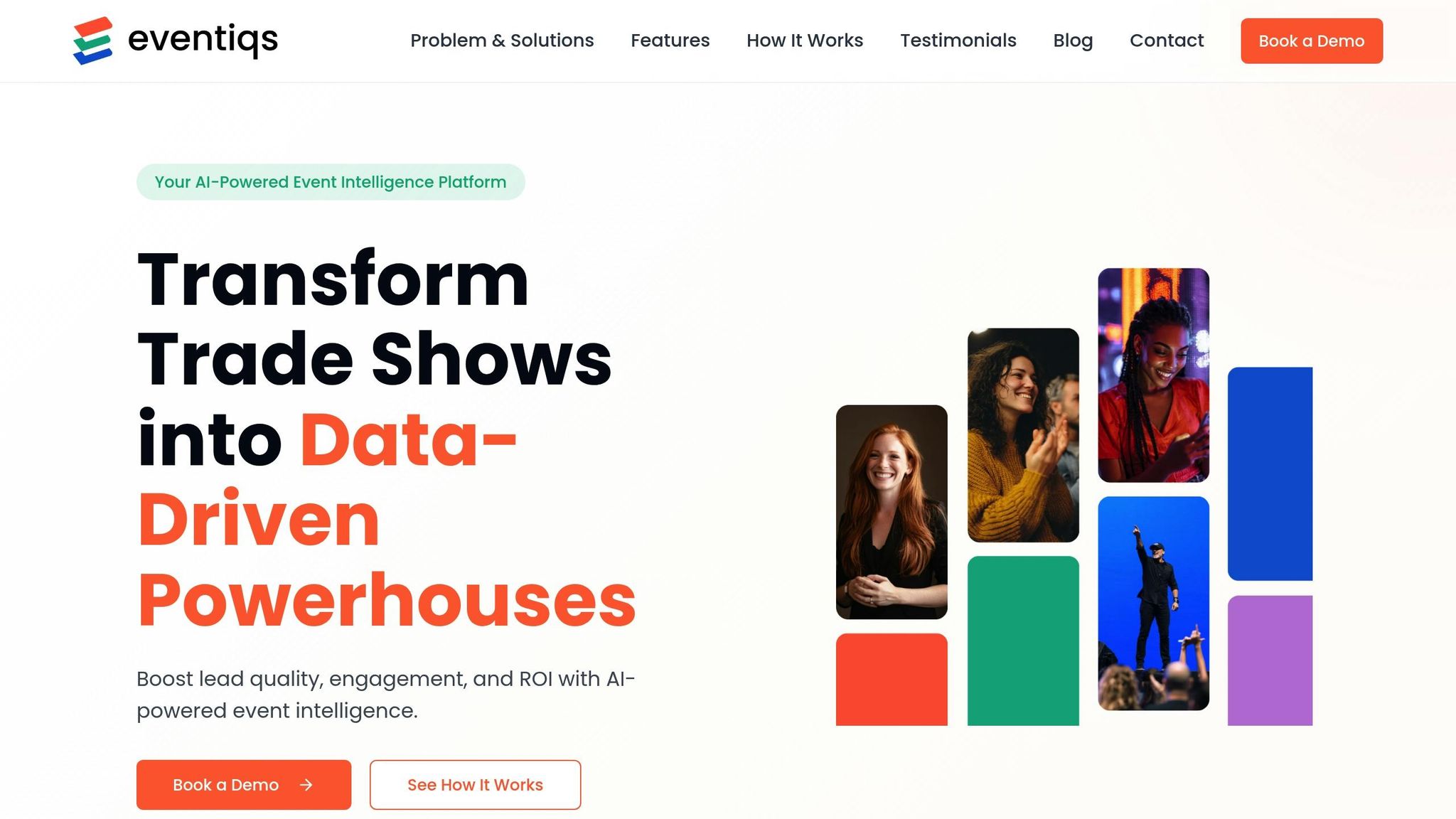
Eventiqs combines registration, program, travel, floor plan, photo sharing, AI-powered matching, meeting requests and messaging, speed networking, QR connections, business card scanning, exhibitor profiles, sponsor ad placements, the organizer panel, communications and analytics as modules in one app. Organizers turn on the modules their event needs. At EMITT 2026 (28,000+ visitors, around 600 exhibitors), more than 3,500 planned B2B meetings ran on Eventiqs.
Best Practices for Using AI Matchmaking Tools
Getting the most out of AI matchmaking tools takes more than just turning them on. Success in lead generation and networking often comes down to following smart strategies that align with the platform's advanced capabilities. Here’s how to make these tools work harder for you.
Prepare Accurate Attendee Data
The power of AI matchmaking starts with strong attendee data. During registration, collect detailed profiles that include job roles, company size, industry focus, and specific interests. This kind of information helps the AI make better matches and pinpoint high-value prospects.
But don’t stop there. Ask each person what they are looking for and what they offer, since matching pairs one side's needs with the other side's offers. Complete, clean profiles also avoid duplicate entries. Regularly verifying and updating this data is especially important if you host recurring events.
Use Real-Time Insights During the Event
Once the event is underway, real-time analytics can be a game-changer. Track attendee engagement as it happens so you can adjust your approach on the spot. This allows you to jump on new opportunities, start timely conversations, and make sure you’re connecting with the right people at the right time.
Plan How Contacts Reach Your Systems
For AI matchmaking to truly shine, what it produces has to reach your existing CRM and marketing tools. In Eventiqs, connections and scanned business cards export to Excel in one file at the end of the event, with names, companies, titles, contact details and notes in their own columns, ready to import into the CRM your team already uses.
Once the file is in your CRM, ranking and outreach happen where they always do. Tools like Salesforce Einstein or HubSpot AI can rank leads based on their likelihood to convert. This means your sales team can focus on the prospects that matter most.
The result? Cleaner data and less manual work: no one retypes business cards, and every note taken at the booth reaches the sales team. Every interaction becomes part of a long-term strategy to strengthen sales and marketing efforts.
Future Trends in AI Matchmaking for Trade Shows
As AI continues to reshape matchmaking in the trade show industry, new trends are emerging that promise sharper and more impactful engagement strategies. With the fast-paced evolution of technology, AI matchmaking tools are becoming smarter, offering exhibitors new ways to connect with prospects and fine-tune their engagement efforts.
Smarter Personalization Through Behavioral Analytics
Behavioral analytics powered by AI is set to take matchmaking to the next level. Instead of relying solely on basic registration details, these systems will analyze real-time attendee behavior to create more tailored experiences. For instance, if an attendee lingers at a booth or interacts with specific demos, the AI will process this data to provide actionable insights. It will continuously update attendee profiles based on these interactions, helping exhibitors adjust their messaging and follow-up strategies on the fly.
Additionally, AI can predict peak times for booth traffic, allowing exhibitors to plan staffing and demo schedules more effectively. This kind of real-time insight doesn’t just personalize engagement - it makes it more strategic, paving the way for tools that enhance lead conversion.
Predictive Analytics for Better Conversion Rates
Taking personalization a step further, predictive analytics will play a key role in improving event outcomes. By analyzing metrics like time spent on content and the depth of attendee interactions, AI can rank prospects based on their likelihood to convert. This gives sales teams a clear roadmap for prioritizing follow-ups, ensuring their efforts are focused on the most promising leads. With such precise insights, every interaction becomes more meaningful and more likely to drive results.
Conclusion: Trade Show Success with AI Matchmaking Tools
AI matchmaking tools are reshaping how exhibitors approach trade shows, replacing outdated networking methods with smarter, data-driven strategies that deliver measurable outcomes. By leveraging AI to pinpoint top prospects and fine-tune engagement tactics in real time, exhibitors can eliminate guesswork and focus on meaningful connections. This shift elevates networking and enhances every stage of the trade show process.
The key to success lies in utilizing comprehensive event intelligence. AI-powered platforms equip exhibitors with a suite of tools to excel - from pre-show matching and meeting requests to live analytics and contact export. This all-encompassing approach ensures you’re getting the most out of your trade show investment.
During the event, real-time insights can make all the difference. Unlike traditional methods, live analytics show meetings, connections and messages as they happen, and match suggestions point exhibitors to the attendees who fit what they offer. This allows exhibitors to pivot strategies and allocate resources wisely.
Another advantage is a clean hand-off to sales: contacts and business cards export to Excel with their notes, ready to import into your CRM for immediate and effective follow-up.
Looking forward, advancements in behavioral analytics and predictive insights will only expand the possibilities, giving exhibitors a level of performance visibility that traditional methods simply can’t match.
For exhibitors aiming to maximize their trade show ROI, AI matchmaking tools represent a smarter, more strategic way to approach events. These platforms transform trade shows from simple networking opportunities into powerful engines for lead generation and business growth.
FAQs
Q: How do AI matchmaking tools improve networking at trade shows compared to traditional methods?
AI matchmaking tools are transforming the way people network at trade shows. By analyzing attendee profiles, interests, and goals, these tools help create personalized and highly relevant connections. The result? Participants spend less time searching for the right contacts and more time engaging in meaningful conversations that lead to better business opportunities.
Unlike old-school networking methods that depend on chance encounters or manual introductions, AI-driven solutions continuously learn and improve from past events. This ongoing refinement boosts matchmaking accuracy, leading to more productive meetings, happier attendees, and stronger results for both exhibitors and participants.
Q: How do real-time analytics enhance exhibitor performance at trade shows?
Real-time analytics play a crucial role in boosting exhibitor performance by providing immediate insights into meetings, connection requests, QR scans, and engagement levels. Armed with this information, exhibitors can quickly adapt their strategies - whether it’s adding staff at busy hours, fine-tuning their interactions, or focusing more on the topics generating the most interest. These on-the-fly adjustments help create stronger connections and improve lead generation.
Another advantage of real-time analytics is the ability to spot trending topics and gauge attendee preferences as they unfold. This opens the door to more personalized engagement, which not only enhances the attendee experience but also increases the chances of conversions. By tapping into these insights, exhibitors can make a bigger impact and see a stronger return on investment at trade shows.
Q: How can AI matchmaking tools help with lead management and follow-ups at trade shows?
AI matchmaking tools simplify lead management by bringing the right people to the booth in the first place: matching compares what each attendee is looking for with what the exhibitor offers. During the event, the booth team saves every contact by QR code or business card scan, with notes, so your team can zero in on the most promising prospects. This not only saves valuable time but also increases overall efficiency.
After the event, the full list exports to Excel in columns a CRM can import, so your sales team can follow up while the conversation is still fresh. With the context of each meeting in the notes, companies can refine customer interactions and boost conversion rates - ultimately driving better results after an event.