Attendee Journey Analytics vs. Traditional Tracking
Attendee Journey Analytics vs. Traditional Tracking
Old tracking methods are falling behind. They rely on basic data like badge scans, surveys, or check-ins, which only scratch the surface of visitor behavior. AI-powered attendee journey analytics, on the other hand, digs deeper - tracking every step, interaction, and preference in real time for a complete picture of visitor engagement.
Key Takeaways:
- Traditional tracking: Limited to post-event data like badge scans or manual surveys, offering fragmented insights.
- AI-driven analytics: Uses sensors, IoT, and machine learning to provide live insights, predict visitor behavior, and prioritize high-value leads.
- Impact: AI tools allow exhibitors to act immediately, optimize booth performance, and focus on meaningful connections with prospects.
Quick Comparison
| Feature | Traditional Tracking | AI-Powered Analytics |
|---|---|---|
| Data Collection | Manual, surveys, basic scans | Real-time sensors, IoT, multi-channel |
| Timing | Post-event | Live during the event |
| Lead Prioritization | Equal treatment for all leads | Behavior-based scoring |
| Engagement Insights | Surface-level | In-depth analysis |
| Follow-up Strategy | Generic outreach | Personalized follow-ups |
| ROI Tracking | Delayed | Instant |
Why this matters: AI analytics transforms trade show strategies by providing actionable insights during events, helping exhibitors focus on quality leads, adjust their approach on the spot, and ultimately improve results.
Old Ways of Tracking
Look at Old Tracking Tools
For lots of years, people who put on trade shows used simple tools and did things by hand to learn about people who came. These ways were helpful, but they often did not give the deep details that people who show things now want.
Manual check-ins mean getting names and info from cards, guest books, or forms on paper. While easy, this way needs a lot of people to work and for the guests to want to give their info.
Surveys after the event try to get what people think about their time at the booth, the products, and if they liked it overall. These can tell us what folks like and why, but only after everything is done.
Event apps let people sign into events, scan codes, and look at stuff. But how well they work depends on people getting the app and using it much while there.
Simple RFID and NFC systems keep track of when people come in and go out, giving just a little info about how people move around. They don't do well in showing how folks talk and act in open spots like booths or places to meet others.
Now, let's talk about why these ways don't do so well in today's quick-moving trade show world.
Why Old Tracking Falls Short
Even though people still use them, the old ways of tracking face many problems that make them not as good for those who need deep, usable info.
Manual check-ins and event apps can mess up and not grab enough interest. Staff might not get all the details when it's busy, lose cards, or write things down wrong. Also, apps do not grab info from folks who do not get or use them much.
RFID and NFC systems can't tell much. They track when someone comes or goes from a booth, but they do not say how folks act with products or staff. This makes it hard for those showing to know how well people are taking part.
Looking at data right now is a big thing that is missing. Surveys given after the event give late info. By the time those showing get what people thought, the event is done, and chances to change things right then are missed.
Tracking how people move and stay in areas right when it's happening is another weak spot in old ways. Without this data, those showing miss the shot to change how they do things right there, making it hard to see what does and doesn't work. Not getting quick answers also makes it tough to show the value of the event to others.
Needing people to take part shows up again and again. Apps can give good data, but only if people use them. A lot of folks who do not join in with these tools leave big holes in the data.
At last, these ways do not tie together research before the event, actions during it, and what follows. Every act stands alone, making it hard for those showing to see the full journey of a visitor or better their plans with deep info. These issues show why we need new answers like AI that can give right-now, detailed tracking and a deep look at data.
AI-Driven Guest Path Study
Old ways of simple, less telling guest tracking are out. AI-driven guest path study has changed the game on how show hosts see and talk to their crowds. With tech like machine learning and sensors, these tools gather and dig into guest moves in ways old-school methods can't. Instead of just basic counts or check-ins, AI keeps watch and breaks down guest steps, showing a full view of how each person deals with shows.
What makes this tech so big is its knack for mixing data from many places into one whole sight. For example, tech-enabled cameras follow motion, IoT sensors note dealings with setups, and smart tech reads talks and feedback right away. All this makes a "digital twin" of the guest time, offering views we never had before.
Unlike older, unmoving systems, AI-driven analytics learn and shift across time, picking up on fine steps and even guessing future moves. These top skills are the heart of the leading traits laid out below.
Main Traits of AI-Driven Analytics
One key skill is real-time interest mapping. As AI tracks where guests look most, it makes live hot spot maps that show spots drawing the most eyes. This info shows right away on screens, letting hosts change setup or staff spots at once for best effect.
Predictive lead scoring shifts things too. Rather than waiting till the event ends to size up leads, AI reads guest moves live. It gives marks based on things like how much they join in and time at certain spots. For instance, anyone spending lots of time at a demo scores higher than one just passing by.
With auto-feeling read, AI digs into talks, feedback forms, and even social talk to feel out guest reactions. This part goes past moves, showing if guests show joy, worry, or real interest.
Cross-channel tracking links up online and offline moves. Whether a guest scans a QR code, checks a site, or talks on social sites, the system maps a complete journey. This helps hosts see how different points sway choices.
Another strong part is behavior pattern know, spotting trends that may skip the eye. Maybe it finds that guests moving through certain booth steps might turn into solid leads. Or it might spot that guests who hang longer at hands-on sets tend to welcome follow-up talks.
Gains for Show Hosts
These sharp traits give clear, easy steps for hosts, aiding them to boost booth show and gains from their spend. Knowing which parts of the booth pull most eyes lets hosts set their space right. If a demo spot always draws a crowd but turns few into leads, changes can be made to get better ends.
AI makes finding good leads better. Old ways often bring in many leads that don't all fit well. AI, though, picks out people who really show they care by how they act. This focused way often brings in more sales and uses sales help well.
With AI, fixing your team's work times gets easier. By looking at when and where people move and when they tune in most, booths can have their best workers around when they are needed most. Also, tech pros can stay near shows to give deep answers when asked.
When we talk about where to put money, AI gives solid info to help choices. Instead of guessing what is best - be it booth look, ads, or team learning - booths can follow what folks do in real-time to pick well. This means money spent is worth it and spent smart for later events.
Maybe the top thing is how fast we get insights. Old ways may need days or more to give useful info. AI, though, gives quick tips, letting booths change things fast. Whether it's moving workers, changing how they talk, or setting up their space differently, these quick tips help booths do their best while the event is still on.
Tools like Eventiqs pull all these skills into one big system, letting booths make the most of what AI can tell about how people move at events.
Key Differences: Traditional Tracking vs. Attendee Journey Analytics
Traditional tracking gives you the basics - like headcounts or badge scans - but AI-powered analytics take things to a whole new level. They uncover deep insights that transform how exhibitors understand and connect with their audience.
Comparison Table of Key Aspects
| Aspect | Traditional Tracking | AI-Powered Attendee Journey Analytics |
|---|---|---|
| Data Collection | Manual badge scans, basic headcounts, simple surveys | Real-time sensors, IoT devices, computer vision, multi-channel data fusion |
| Timing | Post-event analysis only | Live insights during the event |
| Lead Quality | All contacts treated equally | Predictive scoring based on behavior patterns |
| Engagement Depth | Surface-level interactions | Deep behavioral analysis including dwell time, interaction intensity |
| Personalization | One-size-fits-all approach | Individual journey mapping and tailored experiences |
| ROI Measurement | Rough estimates weeks later | Precise, real-time ROI tracking with dollar impact |
| Staff Optimization | Fixed staffing schedules | Dynamic staff allocation based on crowd patterns |
| Follow-up Strategy | Generic post-event outreach | Targeted follow-up based on specific interests and behaviors |
With traditional tracking, you’re often left with numbers that lack context. On the other hand, AI-powered analytics provide real-time feedback, making it easy to tweak strategies on the fly. For instance, if foot traffic slows down in one area, you can quickly reassign staff or adjust your setup to draw more attention.
These tools don’t just change how data is collected - they completely reshape how exhibitors strategize during and after events.
Impact on Exhibitor Outcomes
The shift from traditional tracking to AI-driven analytics has a profound effect on exhibitor results. Traditional methods often leave sales teams chasing lukewarm leads. They might waste time calling someone who barely stopped by the booth, while missing out on a prospect who showed genuine interest but didn’t leave their contact info.
AI insights solve this problem by prioritizing leads based on actual behavior. For example, someone who spent 15 minutes asking detailed questions about your product is flagged as a high-priority prospect, while someone who just grabbed a freebie is ranked lower. This ensures your follow-up efforts are targeted and effective.
AI also enables exhibitors to make quick adjustments during the event. Say you notice a crowd gathering around a particular display. With real-time insights, you can immediately station your top salesperson there to engage with those visitors.
Budgeting becomes smarter too. Instead of guessing which booth elements worked, you get hard data. Maybe your flashy interactive display drew attention but didn’t generate quality leads, while a simple product comparison chart consistently attracted serious buyers. This kind of intel helps you allocate funds more effectively for future events.
Staff also benefit from real-time guidance. They know where to focus their efforts and which prospects are worth engaging more deeply. Instead of spreading themselves thin, they can concentrate on areas and people that matter most.
But perhaps the biggest change is in how exhibitors connect with attendees. AI-powered systems let you move beyond just collecting business cards. By understanding each visitor’s unique interests and concerns, your team can have more meaningful conversations. Instead of giving everyone the same generic pitch, they can tailor their approach to what each person truly cares about.
This shift from quantity to quality redefines what success looks like at trade shows. It’s no longer about how many contacts you collect - it’s about building real relationships with people who are ready to take the next step.
Real-World Applications and Eventiqs' Role
Theories can be impressive, but when it comes to trade shows, practical results are what really count. Exhibitors need tools that deliver better leads, boost ROI, and help them make smarter decisions during events.
How Eventiqs Empowers Exhibitors
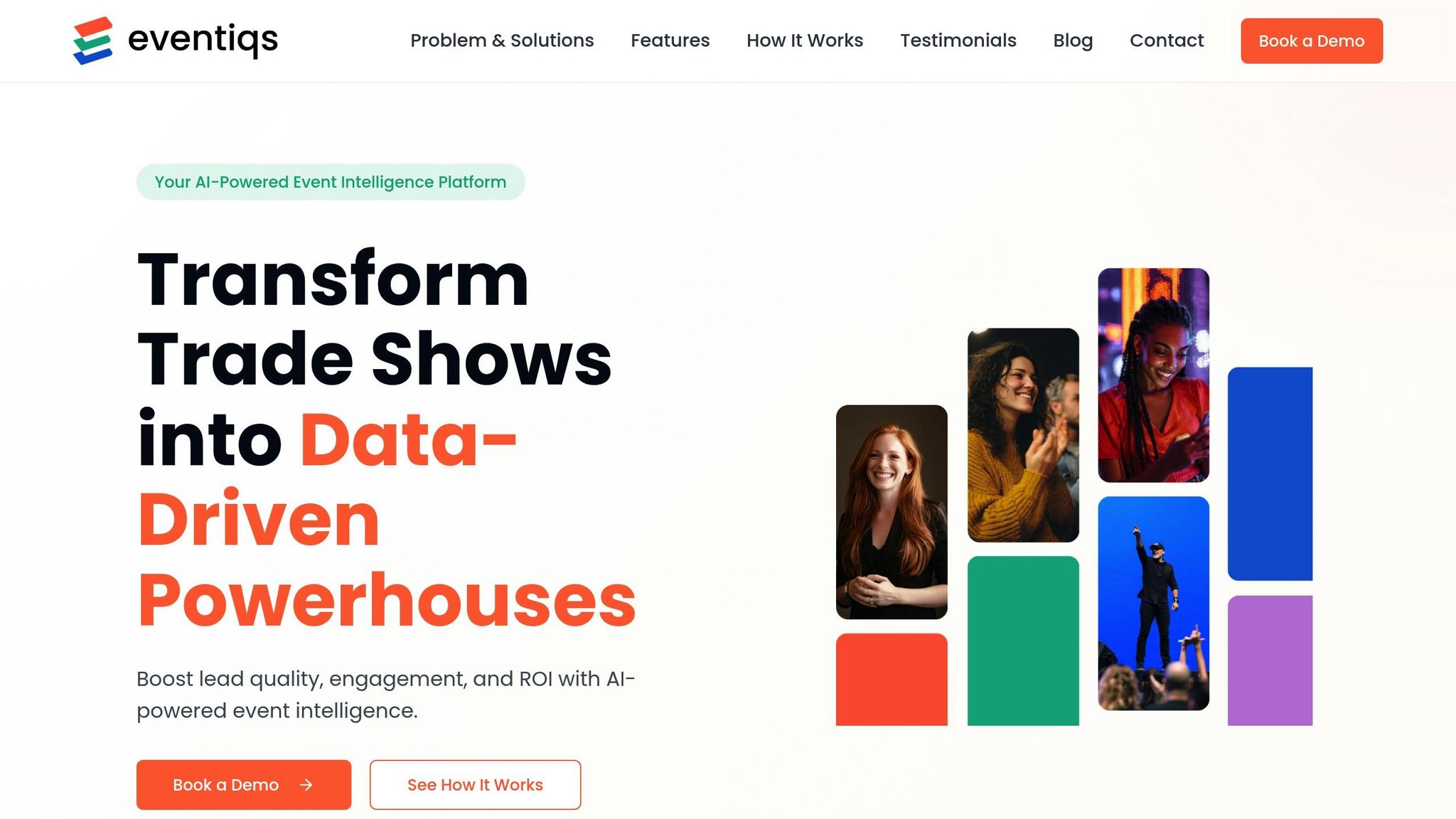
Eventiqs takes the idea of attendee journey analytics and turns it into actionable tools exhibitors can use on the spot. Acting as an AI-powered event intelligence platform, it’s designed to make trade shows more data-driven and effective.
With real-time data processing, Eventiqs provides insights as events unfold. Rather than waiting until the show is over to figure out what worked, its AI engine analyzes visitor behavior in real time, pinpointing high-priority prospects instantly.
Eventiqs merges multi-layered data, real-time analytics, and personalized insights.
— Eventiqs
This means exhibitors no longer have to rely on guesswork or basic badge scans. For instance, if a visitor spends significant time at a product demo or engages in a meaningful conversation, Eventiqs flags them immediately as a high-priority lead.
Its AI-powered matchmaking goes beyond just collecting contact details. By analyzing behavioral patterns across various touchpoints, the platform identifies buying signals, helping exhibitors recognize serious prospects - even before formal introductions are made.
The platform also helps optimize booth strategies using predictive analytics. Exhibitors can identify traffic patterns, peak engagement times, and areas that generate the most valuable interactions. If certain booth sections consistently draw higher-quality prospects, staff can be repositioned to make the most of those opportunities.
And with CRM integration, all these insights flow seamlessly into existing sales systems, ensuring teams can act on the information during and after the event.
Measurable Benefits of AI-Powered Analytics
AI-powered analytics bring clear, measurable improvements that exhibitors can track. These advancements directly impact key performance metrics, making the benefits hard to ignore.
Higher-quality leads are one of the standout advantages. Traditional methods often generate a long list of contacts with unclear intentions. Eventiqs, however, focuses on behavioral cues that align with actual purchasing decisions, allowing sales teams to prioritize prospects who have shown genuine interest through their actions.
AI-powered systems, on the other hand, continuously learn and adapt to new data, allowing for real-time adjustments in lead targeting strategies. This adaptability ensures that marketing and sales teams are always working with the most current and relevant information.
— Eventiqs
Improved staff efficiency is another major plus. Knowing exactly which visitors to focus on means sales teams can spend their time on meaningful interactions instead of spreading themselves too thin. This targeted approach leads to fewer wasted efforts and more productive conversations.
Real-time optimization is also a game-changer. By reallocating resources based on live data, exhibitors can adapt on the fly to focus on the most promising leads.
This dynamic approach allows for real-time adjustments, ensuring that sales teams focus their efforts on leads that are most likely to convert, rather than wasting time on less promising prospects.
— Eventiqs
Accurate ROI measurement is yet another benefit. Traditional methods often rely on rough estimates made weeks after an event. Eventiqs, on the other hand, provides immediate insights into which activities yield the best returns, enabling smarter decisions for future events.
What’s more, the platform’s AI continually improves. With each event, its algorithms refine lead scoring and behavioral predictions, making them even more accurate over time. This creates a snowball effect, where the benefits grow with continued use.
Post-event follow-ups also become far more personalized. Instead of generic emails, sales teams can craft messages that reflect each prospect’s specific interests and engagement during the event, making follow-ups much more effective.
These advancements represent a shift in how trade show success is achieved, moving away from simply gathering contacts to building meaningful relationships with prospects who are ready to take action.
Conclusion
The transition from older tracking methods to AI-powered attendee journey analytics is reshaping how exhibitors approach trade show success. Traditional approaches, like collecting contact details and conducting post-event reviews, offer limited insights. In contrast, AI-driven platforms such as Eventiqs provide real-time insights, turning every interaction into actionable data.
This difference becomes even more apparent when comparing the two. Traditional tracking captures basic metrics - like badge scans and booth visits. Meanwhile, AI-powered tools dig deeper, revealing behavioral patterns that highlight genuine buying signals.
For exhibitors aiming to boost their performance using data-driven insights, AI technology removes the uncertainty that often clouds trade show ROI. With features like instant lead scoring and precise prioritization, sales teams can channel their efforts toward leads who have shown clear interest through their actions.
These real-time insights also pave the way for more personalized and impactful conversations. For instance, if a visitor spends considerable time exploring a specific product demo, that behavior signals interest, enabling sales reps to tailor their discussions accordingly.
Another key advantage is the ongoing learning process AI systems provide. Unlike traditional methods that reset with each event, AI platforms build on past data, refining lead identification and engagement strategies over time. This creates a compounding effect, making each event more effective than the last.
FAQs
Q: How does AI-powered attendee journey analytics make lead prioritization more effective than traditional tracking?
AI-driven attendee journey analytics takes lead prioritization to the next level by analyzing real-time attendee behavior and blending various data points to generate dynamic and precise lead scores. Unlike older methods that depend on fixed rules or outdated information, AI adjusts instantly to shifts in attendee interests and actions.
These real-time insights empower event organizers to pinpoint high-value leads more effectively, customize engagement strategies, and address attendee needs promptly. The outcome? Stronger connections, better-quality leads, and higher conversion rates.
Q: How does AI-driven analytics provide real-time insights during events?
AI-driven analytics uses cutting-edge technology to provide real-time insights during events. Tools like AI-powered event platforms, real-time data processing systems, and edge AI devices work together to analyze data on the spot. These AI algorithms can spot patterns and forecast trends, offering immediate feedback and practical insights.
With this technology, event organizers and exhibitors can gain a deeper understanding of attendee behavior, track engagement levels, and fine-tune performance as the event unfolds. This ensures a more engaging and effective event experience.
Q: How can exhibitors use AI-powered analytics to improve engagement during trade shows?
Exhibitors now have the ability to tap into AI-powered analytics to understand attendee behavior and preferences as they happen. This means they can develop personalized engagement strategies that truly connect with their audience. By identifying what sparks the most interest, exhibitors can adjust their approach to match individual needs, creating more meaningful and satisfying interactions.
AI tools also bring game-changing features like real-time interest mapping and automated lead scoring. These tools help exhibitors quickly pinpoint high-potential leads, ensuring their time and energy are spent where it matters most. The result? Smarter booth interactions, better use of resources, and a stronger return on investment.