Screening event applications: from hundreds of entries to a shortlist you can defend
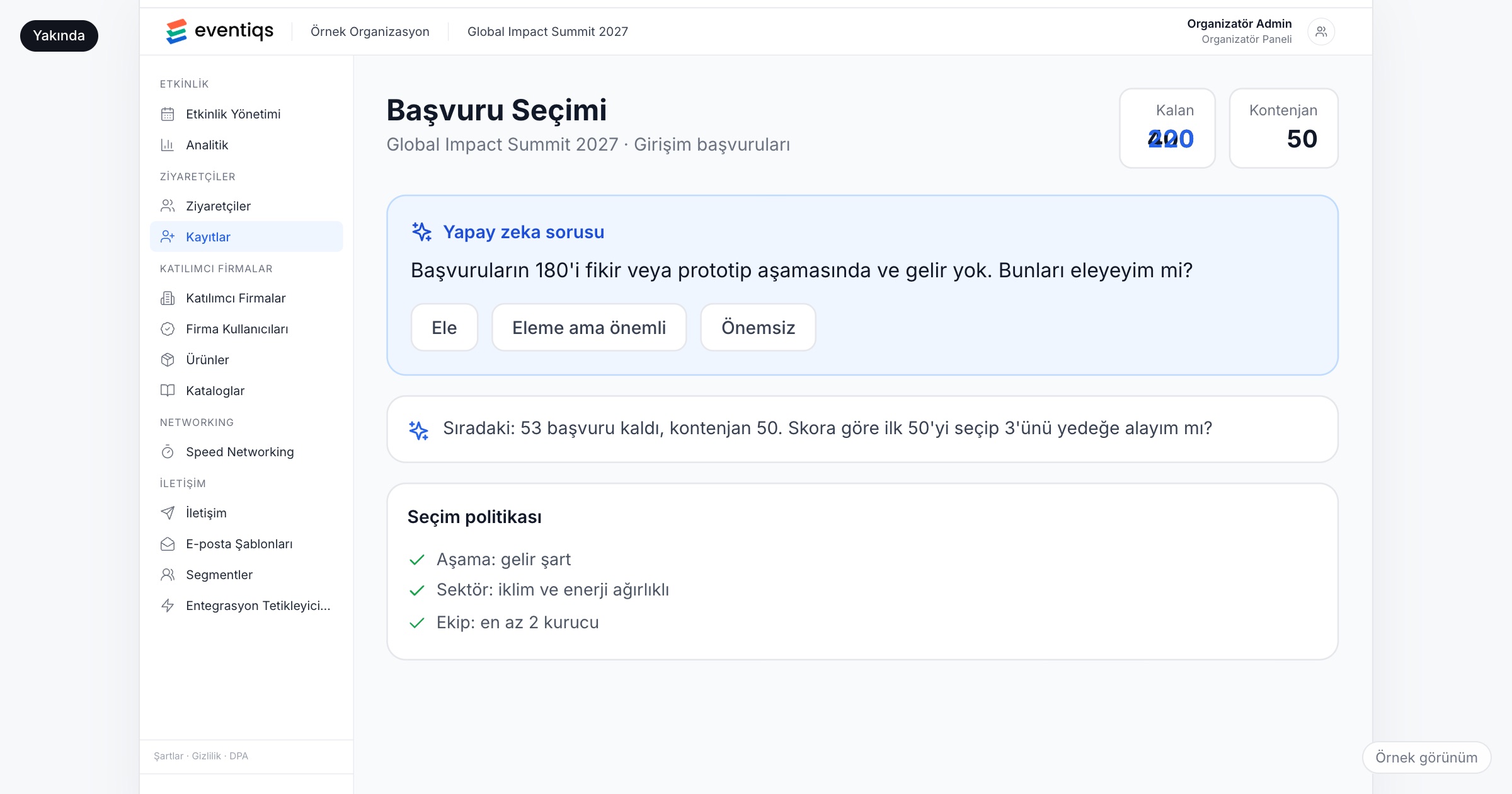
Application screening for events is the work of turning hundreds of entries to a startup competition, a hosted buyer program, a speaker call, an awards program or a scholarship scheme into a shortlist of the people you will accept. It matters because the shortlist decides who is in the room, and a selection you cannot explain loses the trust of rejected applicants, who are often next year's applicants. Whatever tool you use, check that the criteria are written down before scoring starts, that every score carries a reason, that a person approves the shortlist before any result goes out, and that accepted, rejected and waiting-list applicants each get a clear message on the announced date.
Why screening applications is hard
Take a startup competition with 600 applications, 40 places on the demo stage and a jury of five with day jobs. The form exports to a spreadsheet with forty columns, half of them free text. Each juror takes a slice, and each reads differently. By entry 200 everyone is tired, and the last evening's applications get a harder look than the first morning's.
A hosted buyer program has a different problem. The fair pays for flights and hotel nights, so it attracts applicants who are not buyers at all: consultants, students, buyers from a sector the fair does not cover. Every wrong acceptance is a funded trip that produces no meetings for exhibitors.
Speaker calls bring 300 abstracts for 24 slots, and a customer summit may offer a limited number of delegate places to dealers. Corporate programs add their own pressure: at a dealer award or an internal innovation challenge, the reviewers know the applicants, and a rejection is discussed at the next sales meeting.
Fixed filter forms do not solve this. You set "minimum annual revenue" before seeing the pool, then discover that a third of the applicants are at idea stage, or that the field which separates good buyers from weak ones was never on the form. Filters handle the rules you knew in advance; screening is mostly about the ones you find while reading.
How to screen applications well
1. Decide what the program is for before you read
Write down in two sentences what a good accepted applicant looks like, and set the quota. Then split your rules in two: eligibility rules that are yes or no (registered company, buyer role, sector in scope) and scoring criteria that are a matter of degree (traction, purchasing budget, relevance of the talk).
2. Let the pool show you the criteria you missed
Before anyone scores, read a sample of 30 to 50 applications and note what separates them: many startups with no revenue yet, a group of buyers from a country you did not target, a third of the abstracts on the same topic. Each finding becomes a question for the team: screen these out, score them lower, or keep them? Write the answer down as a criterion and apply it to the whole pool, not only to what you read after noticing it.
Ask the vendor: Can the tool find patterns in the applications we received, or does it only filter on fields we defined in advance?
3. Score with reasons, on written anchors
A score from 1 to 5 means little unless "3" means the same to every reviewer. For each criterion, write what a 1, a 3 and a 5 look like, and ask for a one-line reason with every score ("first paying customers, no repeat orders yet"). Reasons let a second reviewer check a score quickly, and they answer the applicant who asks why.
Ask the vendor: Does every score show its reason? Can we see which rule screened an application out?
4. Keep a person in charge of the decision
A formula or an AI model can rank applications and explain the ranking; it should not decide who is accepted. Have a named person approve the shortlist, let reviewers add or remove entries with a short note, and send borderline cases to two people. Nothing goes out to applicants before that approval.
Ask the vendor: Can any result email go out before our team approves the shortlist? Can we add or remove entries by hand?
5. Make the process fair and consistent
Apply the same criteria, in the same order, to every application, and keep gender, age, origin, religion and disability out of them. Before the real scoring, have every reviewer score the same ten applications and compare; the differences show where your anchors are unclear. Jurors with a personal or business tie to an applicant step aside for that application.
6. Plan the timeline backwards from the event
Results have to land early enough for the next step: hosted buyers need time for flights and visas, speakers need time to prepare. Count back from the event to the confirmation deadline, result date, scoring window and application deadline, then publish the result date and keep it.
7. Communicate every outcome
Accepted applicants need the next steps and a deadline to confirm. Rejected applicants deserve a timely, courteous message; one sentence on the reason helps, especially for a competition people will enter again. The waiting list needs an honest message of its own, with the date by which they will hear. When an accepted applicant declines, offer the place to the next person on the list, in order.
Ask the vendor: Can the waiting list get its own message, separate from acceptances and rejections?
Applications are personal data
Applications hold names, contact details, CVs and company figures. For this data the organizer is usually the data controller, and the vendor acts as the data processor. Under Turkey's KVKK and the GDPR, tell applicants in the privacy notice how their application will be assessed, including whether software or AI helps rank it, collect only what the selection needs, and decide when applications are deleted. An AI-scored shortlist is a recommendation: people should review it before any decision is made or sent. This article is not legal advice; talk to your legal counsel about your own case.
Checklist before the call opens
- Describe a good accepted applicant, set the quota, and keep the form to the fields your eligibility rules and criteria need.
- Write anchors for each score and the format of the one-line reason.
- Name the person who approves the shortlist and the reviewers for borderline cases.
- Run a calibration round on ten applications before scoring starts.
- Set the result date, the confirmation deadline and the waiting-list rule, and publish the result date.
- Prepare acceptance, rejection and waiting-list messages in advance.
- Cover application data in the privacy notice.
Common mistakes
- Fixing every criterion before you see the pool. The rules that matter most often appear only once you start reading.
- Splitting the pool without calibrating. Two reviewers with different standards make the result depend on who read which slice.
- Scores without reasons. You cannot check a score, or explain it to an applicant, when nobody wrote down why.
- Sending results before approval. One wrong filter, sent to hundreds of applicants, cannot be taken back.
- Forgetting the waiting list. Places freed by late declines go unfilled, or to whoever writes first.
How Eventiqs helps
Today, Eventiqs' Registration and Visitor Management module collects applications through branded forms with fields per category and runs an approval flow: your team reviews applications and opens access to the accepted ones (event registration). Hasat collects startup-competition applications through its own flow, separate from attendee registration (Hasat 2025). Eventiqs Select (AI Application Screening) is a standalone module that will add the screening step (AI modules). It will not need a fixed filter form or criteria up front: the AI will read the applications, find what sets the pool apart and ask you about it ("180 applications are at idea stage with no revenue. Screen them out?"). Each answer will become a selection criterion for your event, and the remaining applications will be scored on the criteria you mark as important, each joining the shortlist with a short reason. You will see which question screened out the rest and can add or remove entries; once you approve the shortlist, acceptance and rejection emails will go out automatically, and the waiting list will get its own message. AI recommends; you decide. Eventiqs Select is coming soon; request early access. See also startup and investor meetings and the hosted buyer program guide.