10 Ways AI Enhances Trade Show Lead Generation

10 Ways AI Enhances Trade Show Lead Generation
AI is transforming trade show lead generation by improving efficiency, engagement, and conversion rates. Here's a quick summary of how AI can help:
- Higher Conversion Rates: AI boosts lead conversion rates by up to 35%.
- Better Engagement: Personalized interactions drive up to 40% higher attendee engagement.
- Lower Costs: AI reduces cost per lead by 50%.
- Real-Time Insights: Tools like Eventiqs use predictive analytics to identify high-value prospects instantly.
- Enhanced Lead Scoring: Automated scoring prioritizes the best leads, improving sales team focus.
- Personalized Experiences: AI tailors content, booth interactions, and follow-ups to attendee preferences.
- CRM Integration: Seamless data flow ensures efficient lead management and follow-ups.
- Post-Event Campaigns: AI automates personalized outreach, increasing retention and conversions.
AI-powered tools are reshaping trade show strategies, offering measurable improvements in ROI and lead quality. Dive into the article to explore these 10 game-changing tactics in detail.
How AI is Revolutionizing Event Marketing
1. Eventiqs: AI-Powered Event Intelligence Platform
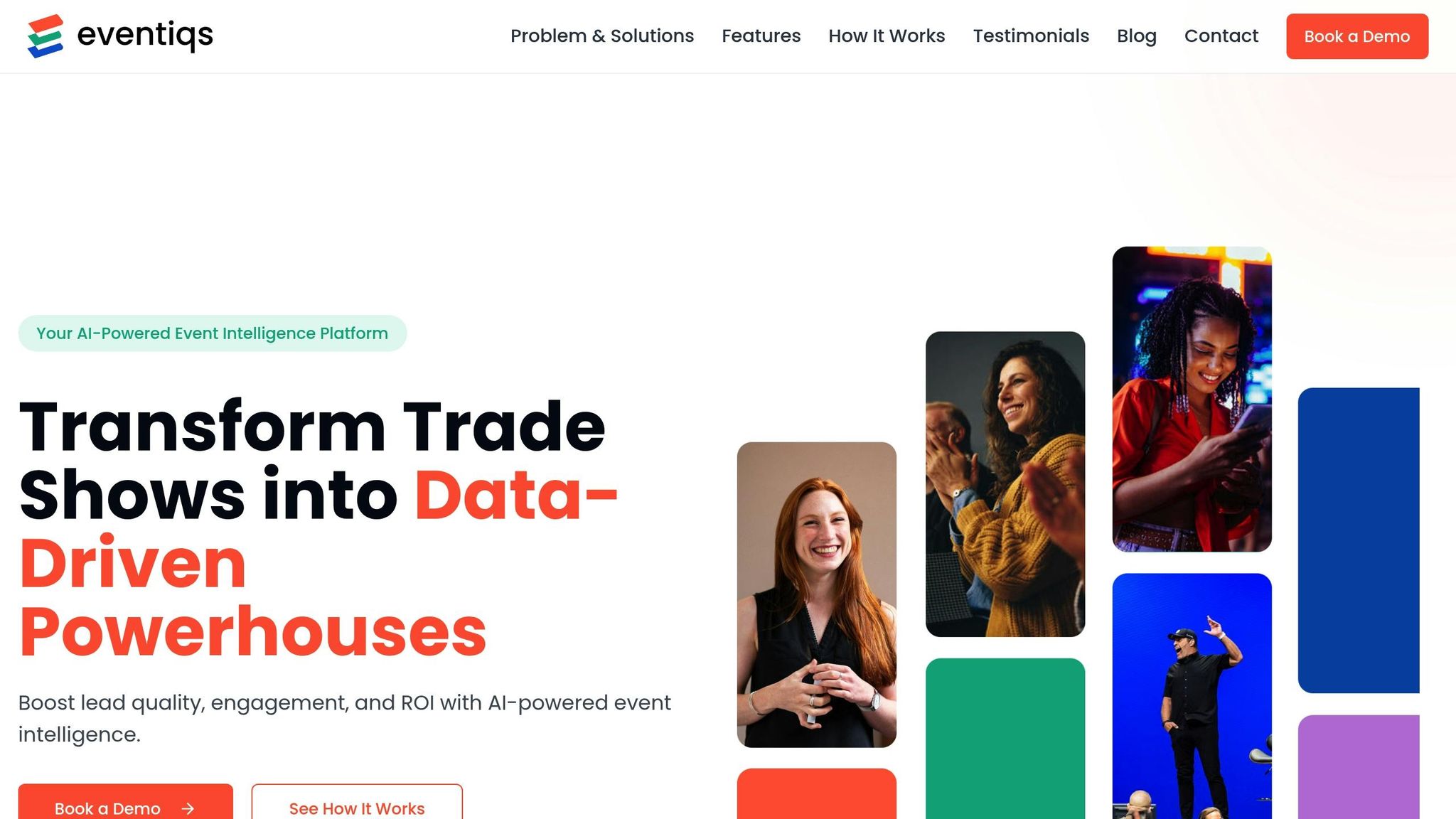
Eventiqs is an AI-powered platform designed to revolutionize lead generation at trade shows. It tackles three major challenges exhibitors face: limited visibility, poor lead quality, and difficulty measuring ROI. Here’s a closer look at how it transforms these areas.
Impact on Lead Quality and Conversion Rates
Eventiqs delivers impressive results, with clients reporting a 147% average increase in qualified leads and conversion rates that are 3.4 times higher than the industry norm [2]. These aren't just modest gains - they represent a shift in how businesses extract value from trade shows.
For instance, TechSolutions Inc. saw a 43% boost in qualified leads after adopting Eventiqs. Sarah Johnson, the company's Marketing Director, shared:
Eventiqs transformed our trade show strategy. We saw a 43% increase in qualified leads and finally have clear ROI metrics for our events. [2]
The platform achieves these results by using AI to analyze attendee behavior and engagement. It identifies prospects with real purchase intent and categorizes leads based on their potential to convert, paving the way for more effective operations.
Efficiency in Streamlining Lead Management
Beyond improving lead quality, Eventiqs simplifies lead management with automated lead scoring and smart qualification tools. By categorizing leads automatically, it cuts down the time between initial contact and meaningful follow-ups.
Innovate Systems is a great example of this efficiency. By leveraging Eventiqs' booth placement optimization, the company doubled its booth traffic. Michael Chen, CEO of Innovate Systems, remarked:
As a smaller exhibitor, we always struggled to stand out. With Eventiqs' AI recommendations, we optimized our placement and saw 2X the booth traffic. [2]
Additionally, its multi-channel lead capture tools ensure that no lead slips through the cracks, even during the busiest trade show moments.
Ability to Personalize Attendee Engagement
Eventiqs allows exhibitors to craft personalized approaches using real-time attendee interest mapping. The platform’s AI evaluates visitor behavior, dwell time, and interactions to provide actionable insights into each prospect's preferences and challenges.
This personalization doesn’t stop at the booth. Eventiqs supports pre-event targeting to identify high-value prospects and post-event nurturing campaigns that deliver tailored follow-ups based on attendees' engagement history.
Integration with Existing CRM and Marketing Systems
One of Eventiqs’ standout features is its ability to close the 51% industry integration gap [2], which often hinders effective lead nurturing. By offering seamless CRM integration, it syncs lead data, interaction history, and qualification scores directly into existing workflows. This ensures timely follow-ups while interest is still high.
GlobalTech Solutions showcases the power of this integration. After implementing Eventiqs, the company improved its follow-up conversion rates by 68%. Aisha Patel, Head of Events at GlobalTech Solutions, explained:
The analytics dashboard is a game changer. For the first time, we can see exactly which strategies drove the most value at our trade shows. [2]
With integrated marketing automation workflows, Eventiqs extends engagement well beyond the event itself, helping exhibitors achieve an average 214% ROI on their trade show investments [2].
2. AI-Powered Attendee Profiling
AI-powered attendee profiling is changing the game for how exhibitors connect with trade show visitors. It goes beyond the surface-level data like age or job title, diving into deeper insights such as genuine interests, buying habits, and engagement preferences. This detailed understanding allows for tailored interactions and smoother follow-ups during and after events.
Impact on Lead Quality and Conversion Rates
One of the most impressive benefits of AI profiling is its ability to improve lead quality. By analyzing attendee behavior - like session attendance, booth visits, and overall engagement - AI assigns objective lead scores in real time [3]. This automated system eliminates guesswork and ensures that only the most promising leads are prioritized.
The results speak for themselves. AI-enhanced lead scoring systems have shown up to a 50% boost in lead conversion rates compared to traditional methods [3]. For example, a tech conference that used wearable devices for attendee tracking saw a 30% increase in conversions. The real-time insights allowed the marketing team to act quickly, engaging with highly interested attendees before the event even ended [3].
Ability to Personalize Attendee Engagement
AI takes personalization to a whole new level. By analyzing professional backgrounds, event participation history, and digital interactions, the system crafts experiences tailored to each attendee's unique preferences [4]. From customized session recommendations to networking suggestions, AI ensures that every participant feels like the event was designed just for them.
Big-name events like Web Summit, Salesforce Dreamforce, and SXSW already use these technologies to adjust content and recommendations in real time [7]. This kind of personalization not only enhances the event experience but also feeds directly into automated lead management systems, making follow-ups more relevant and impactful.
Efficiency in Streamlining Lead Management
Managing leads becomes far less time-consuming with AI on your side. The technology provides verified contact details and even automates follow-up messages, ensuring they’re personalized and timely [4]. Acting like a virtual matchmaker, the system connects attendees with exhibitors, sessions, or networking opportunities that align perfectly with their interests.
This approach has led to measurable results. Events that use AI-driven tools report a 40% increase in attendee satisfaction, largely because participants spend less time searching for meaningful connections [3]. For instance, a virtual real estate expo used AI-powered chatbots and behavioral analytics to improve follow-up effectiveness by 20%. The system scored virtual booth visits and webinar interactions in real time, making it easier to prioritize high-value leads [3].
Integration with Existing CRM and Marketing Systems
AI-powered profiling doesn’t just work in isolation - it integrates seamlessly with existing CRM and event management platforms [3]. This ensures a smooth flow of data, enriching CRM systems with insights that go beyond what traditional methods can capture.
By analyzing past behaviors, purchasing trends, and even social media activity, AI helps event planners design more engaging experiences while ensuring the most relevant leads get personalized attention [4]. After the event, the system continues to deliver value by crafting hyper-personalized follow-up messages based on attendee behavior, even predicting the best times to send them for maximum impact [4].
AI-enhanced tools streamline data processing, qualify leads on the spot, and personalize engagement. - Sonal Snehal Shah, Growth Chronicles [5]
This seamless integration transforms raw attendee data into actionable insights, driving stronger connections and delivering measurable results for exhibitors.
3. Automated Lead Scoring and Qualification
Automated lead scoring is transforming how trade show exhibitors identify and prioritize their most promising prospects. Instead of relying on limited or static data, AI leverages historical deal patterns to predict which leads are most likely to convert.
By analyzing multiple layers of data - such as attendee behavior, professional background, and interaction history - AI creates highly detailed prospect profiles. This deeper analysis leads to better-quality leads and higher conversion rates.
Impact on Lead Quality and Conversion Rates
Companies using AI-driven lead scoring report 38% higher conversion rates from lead to opportunity and experience 28% faster sales cycles compared to traditional methods [9]. In some cases, the results are even more striking - AI-based lead scoring has boosted conversion rates by up to 52% [8].
Take, for example, a B2B SaaS company that implemented an AI-powered speed-to-lead automation platform. By cutting their response time from 12 hours to just 2 minutes, they achieved a 21% increase in conversion rates and reduced manual tasks by 30% [8].
Quick response times play a crucial role in lead qualification. Companies that respond to leads within the first five minutes are 21 times more likely to qualify the lead compared to those that wait 30 minutes or longer. Additionally, 35-50% of sales often go to the vendor that responds first [8].
Efficiency in Streamlining Lead Management
AI doesn't just improve lead scoring - it also makes lead management more efficient. Unlike traditional methods that rely on static criteria, AI analyzes diverse data streams to create accurate, dynamic prospect profiles. This eliminates manual delays and ensures immediate follow-up.
The benefits go beyond speed. 57% of companies using AI-powered automation report a significant reduction in manual data entry [8]. This allows sales teams to focus on building relationships and closing deals instead of wasting time on spreadsheets.
AI also brings marketing and sales teams onto the same page. By using a shared, data-driven scoring system, it removes the subjective disagreements that often arise when teams rely on inconsistent criteria to evaluate prospects.
Integration with Existing CRM and Marketing Systems
AI-powered lead scoring becomes even more effective when integrated with existing CRM platforms. These systems display lead scores directly within familiar tools, eliminating the need to switch between multiple systems. This seamless integration ensures sales teams have quick access to critical information without disrupting their workflow.
The results are impressive. Companies using AI for lead generation report up to a 50% improvement in conversion rates [12]. Businesses with fully integrated AI lead scoring systems see 30% lower lead processing costs, 40% higher conversion rates for qualified leads, a 17% increase in average deal value, and a 35% reduction in customer acquisition costs [9].
Microsoft's BEAM is a prime example of successful integration. By automating data enrichment and predictive analytics, they achieved a fourfold increase in conversion rates [12]. Similarly, a SaaS company using Leadspicker saw a 70% increase in sales-qualified leads within just three months [12].
Through the examination of patterns in historical lead data, AI can identify behaviors and characteristics that have the strongest correlation with successful conversions - without relying on the assumptions or biases of those who build traditional lead scoring models. - Huble, B2B marketing and technology consultancy [9]
For AI lead scoring to deliver consistent results, companies must continuously monitor and refine their models. Regular adjustments help the system adapt to changing market conditions and evolving customer behaviors, ensuring ongoing improvements in lead quality and conversion rates over time.
4. Real-Time Engagement with AI Chatbots
AI chatbots have become a game-changer for trade shows, offering real-time visitor engagement and seamless lead capture through instant, around-the-clock interactions. Acting as virtual assistants, they guide attendees, answer questions, and collect valuable lead information - all without taking a break. According to research, 99% of B2B marketers say these chatbots help boost lead conversion rates [15]. Unlike traditional booth staff, chatbots ensure continuous engagement, setting the stage for better lead management and tailored interactions.
Impact on Lead Quality and Conversion Rates
AI chatbots excel at improving lead quality by asking focused questions to uncover visitor needs and interests. This pre-qualification process ensures sales teams spend their time with serious prospects rather than casual visitors. The results speak for themselves - businesses using AI chatbots report a 30% increase in lead generation and a 15% boost in conversion rates [13]. In fact, sales-oriented chatbots achieve conversion rates three times higher than traditional methods [14]. For instance, one B2B company saw a 40% jump in qualified leads after deploying a chatbot at trade shows [13]. Additionally, 55% of companies using chatbots report gaining higher-quality leads [14]. These tools analyze responses and behaviors in real time, assigning lead scores to help prioritize follow-ups effectively.
Efficiency in Streamlining Lead Management
AI chatbots eliminate the need for manual lead capture, automating the collection, organization, and storage of visitor information. This reduces administrative tasks by 50%, freeing human staff to focus on building relationships and closing deals. Beyond lead capture, chatbots handle routine questions about booth locations, event schedules, and product details, allowing sales teams to concentrate on meaningful conversations with qualified prospects.
Ability to Personalize Attendee Engagement
By analyzing real-time attendee data, AI chatbots create personalized experiences. They can recommend relevant sessions, suggest networking opportunities, and provide tailored information based on each visitor’s profile. Personalized engagement strategies like these have been shown to increase attendee satisfaction by 20% [17]. More than just offering recommendations, chatbots can even connect attendees with relevant contacts, fostering valuable networking opportunities.
Integration with Existing CRM and Marketing Systems
AI chatbots don’t just stop at engagement - they seamlessly integrate with CRM and marketing automation systems to ensure smooth lead management. This integration allows lead data to flow automatically from the initial interaction through every stage of the sales funnel, eliminating the need for manual data entry. By mapping chatbot data to CRM fields and automating follow-ups, businesses can avoid data silos and ensure both marketing and sales teams have instant access to visitor information, conversation history, and lead scores [16]. Regular testing keeps these integrations running smoothly, maximizing the potential for conversions.
5. Predictive Analytics for Visitor Behavior
Predictive analytics takes lead generation to the next level by using historical and real-time data to identify high-potential prospects. Instead of just collecting contact information, this AI-driven method applies advanced algorithms to predict visitor intent and fine-tune every interaction. By analyzing patterns like attendee movement, engagement time, and interaction depth, exhibitors can quickly pinpoint their most promising leads. These insights help refine strategies to improve both lead quality and conversion rates.
Impact on Lead Quality and Conversion Rates
Predictive analytics enhances lead quality by evaluating factors like interaction depth, interest levels, and the likelihood of conversion. This allows sales teams to focus their efforts on the most promising prospects [1]. Companies report seeing up to a 35% boost in conversions, with some achieving an additional 30% improvement [1]. For instance, a healthcare tech firm shifted from relying on job titles to scoring leads based on their engagement with compliance-related content, resulting in a 22% increase in conversions [20]. These predictive insights work hand-in-hand with other AI tools discussed earlier.
Ability to Personalize Attendee Engagement
Using predictive analytics, businesses can create tailored booth experiences that resonate with individual visitors [1]. By gathering and analyzing data from various touchpoints - like website visits, emails, and social media - companies gain a well-rounded view of each lead's preferences [21]. This approach has led to up to a 40% increase in attendee engagement at some events, while also improving lead scoring for more impactful conversations [19].
By analyzing data from multiple touchpoints (website visits, email interactions, social media engagement), businesses can develop a better understanding of individual leads and their preferences. – DC Analytics [21]
At a recent medical conference, a pharmaceutical company used AI to scan attendee badges and match the data with their published research interests. The system then sent personalized emails with relevant drug studies and trial results, significantly increasing engagement and follow-up success rates [1].
Integration with Existing CRM and Marketing Systems
Predictive analytics seamlessly integrates with CRM platforms, ensuring that high-potential leads are smoothly incorporated into existing sales workflows while improving tracking and follow-up processes [22]. Companies using these tools have reported a 21% rise in sales, a 12% drop in customer churn, and 74% stating better sales forecasting through their CRM systems [23]. AI tools continuously analyze various data sources, such as public records and online behavior, to identify patterns that signal purchasing intent [22]. Businesses with a strong handle on predictive analytics also see a 9.3% higher frequency of meeting sales quotas [19].
Modern platforms go beyond basic data integration by working with behavioral data pipelines, conversation intelligence tools, and smart scheduling systems to build an all-encompassing lead management ecosystem. This ensures that every piece of visitor data contributes to more accurate predictions and better conversion outcomes.
6. Smart Badge and Wearable Integration
Smart badges and wearable technology have transformed trade show dynamics, offering real-time engagement and streamlining interactions. These devices go beyond simple identification, capturing visitor data, tracking behavior, and delivering tailored content on the spot. They complement AI-driven profiling and automation, creating a more interactive and efficient event experience.
By leveraging technologies like NFC (Near Field Communication) and Bluetooth beacons, modern smart badges enable instant data sharing between attendees and exhibitors. Take Hubvents' SmartTrac, for instance - it alerts exhibitors when a high-potential attendee is nearby, using movement tracking and behavioral data to build detailed profiles.
Efficiency in Lead Management
Smart badges significantly cut down the time and effort needed for lead capture. Events using badge scanning report a 50% decrease in lead capture time and a 40% boost in lead retrieval compared to traditional methods [24].
For example, the Loopd Badge simplifies contact sharing with a single click. It stores attendee details in the cloud and triggers automated workflows, assigning lead scores based on engagement and adding leads to follow-up sequences. This automation allows sales teams to focus on meaningful conversations rather than administrative tasks.
Boosting Lead Quality and Conversion Rates
These devices don’t just make lead capture easier - they improve the quality of leads and boost conversion rates. By integrating badge scanning with CRMs, companies can ensure quick and organized follow-ups, leading to up to a 30% increase in conversion rates [24]. Automated follow-ups from badge scans also see a 35% higher open rate compared to standard emails [24].
The data gathered by smart badges provides deeper insights into attendee behavior, enabling more accurate lead scoring. Instead of relying solely on generic metrics like job titles or company size, sales teams can analyze engagement levels - such as time spent at booths or interactions with materials - to identify the most promising leads and optimize their efforts.
Personalizing Attendee Engagement
Smart badges shine when it comes to personalizing the attendee experience. Using beacon technology, these devices track real-time behavior and provide tailored content and session recommendations [26].
They also make networking effortless - attendees can exchange contact information with a simple tap.
The Klik SmartBadge isn't just a tool for events; it's a tool for connecting humanity. - Will Curran, Head of Klik [25]
On top of that, they enhance engagement through gamification. Attendees can join scavenger hunts, live polls, and Q&A sessions, earning points and rewards for booth visits and session participation. These personalized interactions seamlessly integrate with CRM systems for a cohesive experience.
Seamless CRM and Marketing Integration
Modern smart badge systems integrate directly with existing CRM platforms, ensuring event data flows smoothly into established sales processes. This eliminates manual entry errors, reduces administrative work, and enhances lead tracking and follow-ups [24].
For instance, in May 2024, Momencio showcased its integration with HubSpot, demonstrating how event data could be transferred effortlessly into CRM systems for better lead management. With events responsible for generating 20-25% of B2B leads, such integrations are crucial for maximizing trade show ROI [24].
7. Personalized AI-Based Recommendations
AI-powered recommendation systems play a key role in strengthening connections between exhibitors and attendees by tailoring experiences to individual preferences. By analyzing data, these systems suggest sessions, products, and networking opportunities that align with each attendee's interests, fostering meaningful interactions and driving better conversion rates.
Unlike one-size-fits-all methods, AI recommendations adapt to factors like job role, industry focus, past event behavior, and engagement patterns. Building on earlier AI-driven profiling and lead scoring, these personalized recommendations adjust dynamically, refining interactions in real time.
Impact on Lead Quality and Conversion Rates
AI recommendations don’t just stop at identifying potential leads - they help exhibitors connect with attendees who are genuinely interested. This targeted approach has been shown to boost conversion rates by 35% [1].
For example, at a major tech conference, an AI-driven lead-scoring system used wearable tech to track attendee movements and session participation. Real-time analysis of this data led to a 30% increase in lead conversion rates compared to prior years [3]. Similarly, an International Medical Symposium used AI to analyze feedback from past events. By offering session recommendations tailored to attendee profiles, they improved satisfaction ratings by 25% and fostered more professional collaborations [3].
Ability to Personalize Attendee Engagement
AI thrives at delivering tailored experiences that make attendees feel appreciated and valued throughout an event. This has significantly enhanced attendee engagement [1].
Take Web Summit as an example: its AI-powered recommendation engine suggests personalized sessions, speakers, and networking opportunities based on attendee data [7]. Salesforce's Dreamforce event takes this a step further, employing Einstein GPT to customize nearly every aspect of the attendee experience, from curated session tracks to networking suggestions [7].
Personalization has become a cornerstone of effective engagement in today's digital-first world, and live events are no exception. When attendees feel recognized and valued, their perception of an event's importance rises exponentially. - Cramer [18]
AI personalization strategies also boost attendee satisfaction by 20% [17]. Exhibitors can provide customized materials - like brochures, videos, or demos - that resonate with individual attendees. These interactions happen across multiple platforms, including mobile apps, social media, and email, ensuring a seamless and engaging experience [6][27].
Integration with Existing CRM and Marketing Systems
AI systems don’t operate in isolation - they integrate seamlessly with existing CRM workflows, making lead management, customer segmentation, and communication more efficient. By analyzing past interactions, purchase history, and behavioral data, AI ranks leads based on their likelihood of converting. This allows sales teams to focus on high-priority prospects and even identify upselling and cross-selling opportunities by predicting future customer needs [28].
Organizations that adopt AI often see faster response times to customer inquiries and partner requests [29]. In fact, 81% of business professionals report that AI helps them reduce time spent on manual tasks [30]. Automating routine activities like scheduling appointments and sending follow-up emails frees up teams to focus on strategic efforts.
Major CRM platforms now incorporate AI recommendations directly into sales workflows [28]. This ensures that insights gathered at trade shows flow smoothly into established processes, maximizing the return on investment for these events. By integrating AI into the bigger picture, companies are embracing a more connected, efficient, and data-driven approach to trade shows and beyond.
8. Automated Note-Taking and Meeting Summaries
Trade shows can be a whirlwind of conversations, making it tough to keep track of important details while staying engaged with potential leads. This is where AI-powered note-taking tools come in handy. These tools can transcribe discussions in real time, highlight key points, and organize action items. This means teams can focus on building relationships without worrying about losing critical information along the way.
Automated meeting summaries take it a step further, turning lengthy conversations into concise overviews that outline decisions and next steps. Having these digital records at hand allows sales teams to create more effective follow-ups, which can significantly improve lead quality and conversion rates. For instance, exhibitors who use digital lead capture often see conversion rates that are three times higher, and leads followed up on within 24 hours are seven times more likely to convert [32].
Making Lead Management More Efficient
AI tools can instantly produce searchable transcripts, pull out action items, and even assign tasks complete with deadlines and reminders [31]. This streamlined process ensures that commitments made during fast-paced trade show interactions don’t fall through the cracks. It’s no wonder that 87% of executives believe their roles will be enhanced by generative AI, emphasizing its role in improving efficiency while still relying on human expertise [11]. By capturing insights in an organized way, these tools make personalized follow-ups much easier.
Crafting Personalized Follow-Ups
Meeting summaries also help create highly personalized follow-ups by identifying action items, questions, and even the tone of the conversation. For example, in April 2025, Spiky AI paired with Mailsoftly to automatically generate follow-up emails that included specific takeaways and recommended next steps [34]. This kind of tailored communication can make a huge difference in keeping potential leads engaged.
Seamless CRM and Marketing System Integration
These AI tools don’t just stop at efficiency and personalization - they can also integrate directly with existing CRM systems. This allows AI-generated notes to be embedded into customer records, providing valuable context for follow-ups [33]. In fact, nearly half (46%) of business owners are already using AI in customer relationship management. Tools like Pipedrive’s AI Sales Assistant showcase how integration can track interactions and offer actionable recommendations for engaging with leads [10]. By creating a unified view of customer data, teams can work smarter and deliver more effective follow-up strategies.
9. Heat Mapping and Traffic Analytics
Figuring out how attendees move through trade show spaces can give exhibitors a major edge when it comes to generating leads. AI-powered tools like heat mapping and traffic analytics turn visitor movement into actionable insights, showing which spots grab the most attention and when engagement peaks. Using sensors and cameras, this technology tracks foot traffic, dwell times, and crowd density across the event.
Impact on Lead Quality and Conversion Rates
Here's a real-world example: At ISC West, sensor data revealed that the Ford Transit Connect area held visitors' attention the longest, leading to a 35% jump in conversion rates [40][1]. With modern sensors boasting up to 99.9% accuracy in counting people [39], exhibitors can confidently use this data to focus their efforts where it matters most. These insights also make operational planning much more efficient.
Efficiency in Streamlining Lead Management
Heat mapping powered by AI gives exhibitors a clear picture of visitor flow, peak times, and how long people stay in specific areas. This information is invaluable for optimizing booth layouts and staffing. In fact, in 2022, 75% of event marketers said event-specific analytics were critical for making strategic decisions [35]. These insights help exhibitors identify what draws the crowd, allocate resources effectively, and manage traffic during busy moments.
Ability to Personalize Attendee Engagement
Heat maps also play a big role in personalizing how exhibitors interact with attendees. By analyzing visitor behavior, exhibitors can tailor their approach to better connect with their audience [38]. Events using AI-powered tools have reported up to a 40% boost in attendee engagement thanks to more targeted and meaningful interactions [1]. With this data, exhibitors can strategically position booths, signage, and promotional materials to attract more foot traffic and maximize engagement.
Integration with Existing CRM and Marketing Systems
AI doesn't just stop at analyzing heatmap data - it also uses predictive analytics to forecast future trends based on past behavior. This helps businesses stay ahead with proactive lead generation strategies [36]. Companies like Eventiqs combine heat mapping with automated lead scoring and CRM integration, giving exhibitors a complete view of their trade show performance. However, successful integration hinges on having updated CRM data and ensuring users are well-trained [37].
10. Post-Event Lead Nurture Campaigns
The work doesn’t stop when the event wraps up. Following up with leads after the show is essential. However, up to 80% of event-generated leads never receive a follow-up [43]. That’s where AI-powered post-event nurture campaigns come in, ensuring no lead slips through the cracks. These systems take raw attendee data and turn it into tailored engagement strategies, keeping prospects interested and guiding them further down your sales funnel.
AI evaluates interactions from the event floor, such as booth visits, session attendance, product demos, and even conversation topics. Using this data, it builds detailed behavioral profiles for each lead. These profiles then fuel highly-targeted follow-up efforts that feel personal, extending the impact of the event far beyond its closing day.
Impact on Lead Quality and Conversion Rates
AI-driven follow-up campaigns deliver real results. Businesses that use lead scoring and nurturing powered by AI generate 50% more sales-ready leads while cutting costs by 33% compared to manual processes [17]. Timing plays a huge role here - leads are 10 times less likely to convert if follow-up takes longer than five days [43].
For example, one B2B trade show implemented AI-driven email campaigns that customized content based on attendee interests. The result? A 20% improvement in attendee retention and a boost in registrations for the next event [41]. Personalized outreach outperforms generic methods by a wide margin, achieving transaction rates that are six times higher [43].
Streamlining Lead Management with AI
AI doesn’t just improve lead quality - it also makes lead management more efficient. By analyzing data in real time, AI categorizes leads by their level of interest, engagement, and likelihood to convert.
Take the case of a mid-sized professional guild in Latin America. After adopting AI-powered tools, they saw a 60% jump in email open rates and significant increases in click-throughs and registrations [44]. Unlike traditional methods that rely on manual segmentation and generic email blasts, AI enables dynamic, personalized outreach that adjusts based on behavior. This automation frees up sales teams to focus on closing deals rather than administrative tasks.
Personalizing Attendee Engagement
AI takes personalization to a whole new level. It doesn’t just add a name to an email - it creates unique engagement strategies for each lead based on their actions at the event. For instance, if an attendee spent a lot of time at a product demo but skipped a pricing session, AI can send follow-up content tailored to their specific interests.
The system tracks booth visits, materials downloaded, and conversations that resonated most with attendees. This data shapes personalized thank-you emails and targeted content recommendations. AI even predicts the best times to send follow-ups by analyzing communication patterns and industry trends [4].
Seamless Integration with CRM and Marketing Systems
Modern AI tools integrate effortlessly with existing CRM platforms, automatically updating lead scores and engagement histories without the need for manual input.
Businesses have reported impressive results with AI-powered CRMs. For example, a B2B software company saw a 35% increase in qualified leads and a 20% boost in conversion rates after implementing AI-driven lead scoring post-event [42]. Similarly, a marketing agency using AI for lead nurturing achieved a 40% increase in engagement rates and cut their sales cycle length by 25% [42]. These systems trigger relevant content based on trade show interactions, maintain consistent communication schedules, and continuously refine lead scores as prospects engage with follow-up materials.
Eventiqs, for instance, integrates post-event analytics directly into your CRM, ensuring that insights from the trade show become a seamless part of your broader customer relationship strategy. The key is selecting AI tools that complement your existing systems, so you don’t need to overhaul your entire tech stack.
Comparison Table: Old vs AI-Powered Lead Generation
Traditional lead generation often relied on manual efforts like collecting business cards or jotting down notes. This approach focused more on gathering as many leads as possible rather than ensuring their quality, leading to high costs and wasted time chasing unqualified prospects.
On the other hand, AI-powered systems leverage machine learning, predictive analytics, and natural language processing to streamline lead identification, qualification, and engagement. These tools can pre-schedule meetings and pinpoint potential leads even before an event begins, allowing sales teams to concentrate on the most promising opportunities [47].
The efficiency gains are hard to ignore. AI-driven lead engagement has cut lead qualification time by 80%, enabling sales teams to focus on closing deals rather than sifting through data [46]. Predictive lead scoring models have also been shown to boost conversion rates by up to 20% compared to traditional methods [46].
Here’s a breakdown of how traditional and AI-powered lead generation stack up:
| Aspect | Traditional Lead Generation | AI-Powered Lead Generation |
|---|---|---|
| Lead Qualification | Manual review, gut instincts | Automated scoring with predictive analytics |
| Time to Qualify | Hours to days | Real-time analysis |
| Conversion Rates | Baseline performance | Up to 35% higher [1] |
| Cost Per Lead | High, resource-intensive | Up to 50% lower [1] |
| Attendee Engagement | Generic interactions | Up to 40% increase [1] |
| Follow-up Timing | Delayed, manual processes | Instant, automated responses |
| Sales Team Productivity | Limited by manual tasks | 32% improvement [46] |
| Data Processing | Slow, error-prone | Real-time, precise analysis |
| Personalization | Basic demographic targeting | Behavioral and intent-based targeting |
The return on investment (ROI) is a game-changer. Companies using AI for lead generation and follow-ups report a 35% increase in conversion rates compared to those sticking with traditional methods [1]. For example, a SaaS company saw a 120% jump in qualified leads after adopting an AI platform for lead generation and nurturing [46].
AI systems also excel at processing real-time data, allowing for quicker responses to leads compared to the delays often seen with manual methods [45]. Traditional approaches, plagued by slow feedback loops and inconsistent targeting, simply can’t keep up with the adaptability of AI tools that adjust to market changes and audience behavior [48].
Cost efficiency is another major win for AI-powered methods. While traditional lead generation scales with the size of the team, AI systems can scale with minimal additional expense [48]. They can reduce the cost per lead by up to 50% by focusing on high-quality prospects and optimizing resources [1].
Platforms like Eventiqs highlight these benefits. By using AI-driven features such as booth placement optimization, real-time attendee interest tracking, and automated lead scoring, exhibitors can significantly improve lead quality, conversion rates, and ROI. It’s clear that the future of trade show success lies in smart automation, not outdated manual processes.
Conclusion
AI is reshaping the trade show industry, with the market projected to grow from $1.8 billion in 2023 to $14.2 billion by 2033 [49]. Businesses that adopt these technologies are positioning themselves for a strong competitive edge.
When it comes to lead generation, AI consistently outperforms traditional methods by improving both lead qualification and engagement. Platforms like Eventiqs showcase this shift by offering tools that redefine how exhibitors connect with prospects.
Take Eventiqs, for example. This platform integrates AI-driven booth placement, real-time attendee interest tracking, and automated lead scoring into one seamless solution. Instead of gathering stacks of business cards, exhibitors can zero in on high-value prospects before they even visit the booth. This approach transforms trade show interactions into meaningful, personalized engagements on a large scale.
AI also addresses some of the industry's biggest challenges. Tasks like manual lead qualification, which once took weeks, are now completed instantly, freeing up sales teams to focus on closing deals. Post-event follow-ups, which often felt generic and delayed, become immediate and tailored to individual prospects.
With the events industry expected to reach $2.5 trillion by 2035 [50], AI-powered solutions are quickly becoming the norm for lead engagement and nurturing. Companies that seamlessly integrate AI into their trade show strategies are poised to claim a larger share of this growing market.
Success at trade shows now hinges on automation, predictive insights, and personalized engagement. Platforms like Eventiqs are setting a new benchmark for return on investment, turning trade show appearances into calculated strategies with measurable outcomes. The real question is no longer whether AI will transform trade show lead generation - it’s whether your organization will take the lead or lag behind in this inevitable evolution.
FAQs
Q: How does AI help improve lead conversion rates at trade shows?
AI is transforming how businesses approach lead conversion at trade shows by making it easier to identify and engage with potential customers. One standout feature is real-time lead scoring. By analyzing interactions and behaviors on the spot, AI helps businesses focus on the leads most likely to convert, saving time and effort.
Another game-changer is smart lead capture paired with automated outreach. These tools streamline the process of collecting lead information and enable quick, personalized communication. By delivering timely and relevant follow-ups, businesses can significantly boost their chances of turning prospects into long-term clients.
Q: How does integrating AI tools like Eventiqs with your CRM system improve trade show lead generation?
Integrating AI tools like Eventiqs with your CRM system can take your trade show lead generation to the next level by simplifying workflows and improving how you make data-driven decisions. With features like lead scoring, automated task management, and predictive analytics, these tools help you zero in on the most promising opportunities while cutting down on time-consuming manual tasks.
AI also makes it easier to deliver personalized customer interactions, allowing you to customize follow-ups and recommendations based on each prospect's preferences and behavior. This not only boosts efficiency but also deepens engagement with potential clients, increasing the chances of turning leads into lasting business relationships.
Q: How does AI help create personalized experiences for attendees during and after trade shows?
AI takes attendee engagement to the next level by crafting personalized experiences during and after trade shows. At the event, AI-powered tools like chatbots and virtual assistants create tailored interactions. These tools can answer attendee questions, suggest relevant sessions or exhibitors, and even recommend networking opportunities based on individual preferences. They can also adjust on the fly, offering features like personalized agendas or dynamic signage, making attendees feel appreciated and involved.
Post-event, AI keeps the momentum going with customized follow-ups. This might include curated session recordings, targeted recommendations, or content tailored to each attendee's interests. By continuing these meaningful interactions, AI helps build stronger, lasting connections, keeping attendees engaged long after the trade show wraps up.