AI Matchmaking Tools for Trade Shows

AI Matchmaking Tools for Trade Shows
AI matchmaking tools are transforming trade shows by connecting attendees and exhibitors in smarter, more efficient ways. These platforms use artificial intelligence to analyze data like profiles, interactions, and preferences, helping participants make meaningful connections that align with their goals. Traditional networking often relies on chance, but AI ensures targeted, relevant introductions, improving outcomes for everyone involved.
Key Highlights:
- What It Does: Matches attendees based on interests, goals, and behavior.
- How It Works: Analyzes profiles, booth visits, and session participation to suggest connections.
- Why It Matters: Boosts networking quality, increases lead generation, and enhances event ROI.
- Tools Like Eventiqs: Offer features such as real-time analytics, automated scheduling, and CRM integration.
AI matchmaking tools are helping exhibitors and attendees save time, focus on high-value interactions, and achieve better results at trade shows.
Key Features of AI-Powered Matchmaking Platforms
AI matchmaking platforms are changing the game for how attendees connect at trade shows. These tools go beyond just swapping contact details - they create an ecosystem where meaningful business relationships can thrive.
Personalized Attendee Matchmaking
The magic begins with smart profile analysis, where AI dives into attendee profiles, reviewing details like job titles, company info, industry focus, and goals. It even tracks behavioral patterns - such as which sessions they attend, booths they visit, or interactions they’ve had - to build a complete picture of each participant.
Using this data, the algorithm calculates compatibility scores, often uncovering unexpected but valuable connections. For instance, a software developer might be matched with a marketing executive focused on digital transformation - pairings that might not happen through traditional networking.
The system also employs dynamic preference learning, which means it gets better with every interaction. As users schedule meetings, exchange contacts, or skip recommendations, the AI learns and fine-tunes future suggestions, ensuring each match becomes more relevant over time.
Even timing optimization plays a role. The AI considers participants’ schedules, preferred meeting times, and even their energy levels throughout the day to suggest the best moments for introductions. This ensures that meetings happen when both parties are most receptive and engaged.
These personalized touches create a highly interactive and engaging event experience.
Real-Time Analytics and Interest Mapping
AI-powered platforms don’t just connect people - they provide live behavioral tracking to give organizers and exhibitors a clear view of attendee engagement. By monitoring foot traffic, session attendance, booth visits, and digital interactions, these tools generate real-time heat maps that highlight activity hotspots.
Through interest clustering, the system identifies trending topics or themes as they emerge. For example, if sustainability solutions suddenly capture widespread attention, the AI can quickly link like-minded attendees for impromptu networking opportunities while the interest is still fresh.
The platform’s analytics dashboard delivers actionable insights exhibitors can use on the spot. If a product demo or session draws significant attention, exhibitors can adjust staffing, extend the session, or even organize spontaneous discussions to capitalize on the momentum.
With predictive engagement scoring, the AI flags attendees most likely to convert into leads or partnerships. By analyzing engagement patterns, it helps sales teams focus their efforts on high-value prospects, ensuring no opportunity is missed.
Automated Scheduling and Lead Management
One standout feature is automated calendar coordination, which eliminates the hassle of manual scheduling. The AI checks participants’ availability and suggests the best meeting times. Once both parties agree, it sends calendar invites, streamlining the entire process.
Another key tool is lead scoring automation, which evaluates interactions and assigns quality scores based on engagement levels. For example, a quick chat at a booth might score lower than an in-depth product demo with follow-up questions. This helps sales teams prioritize their outreach efficiently.
With CRM integration, all contact details, interaction notes, and lead scores are automatically synced to existing customer relationship management systems. This ensures no valuable connection slips through the cracks and allows for immediate follow-up.
The platform also excels in follow-up orchestration. After the event, it triggers personalized email sequences, schedules reminders, and recommends the best times to reconnect based on previous engagement.
Eventiqs: AI-Powered Event Intelligence Platform
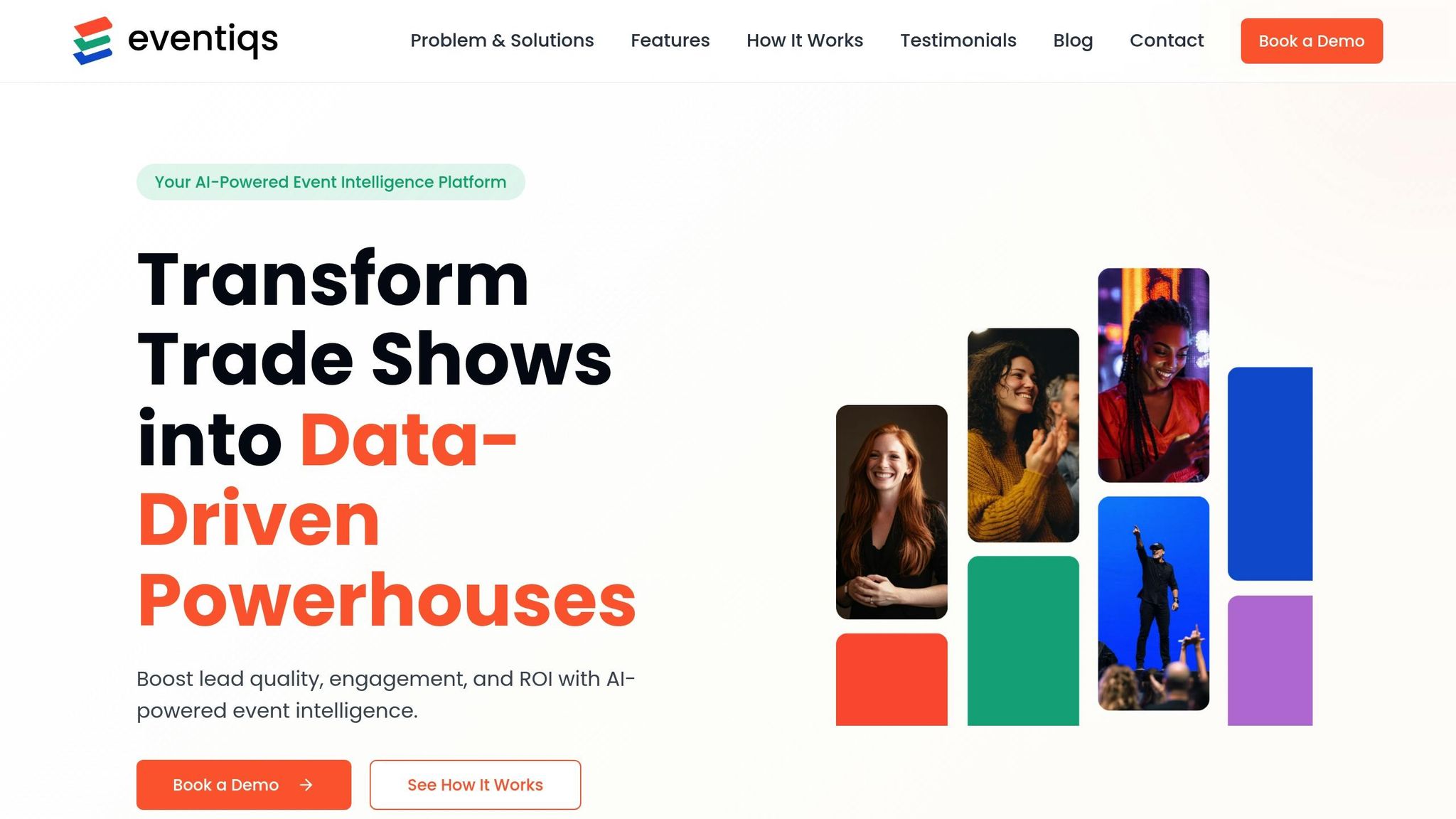
Eventiqs is changing the game for trade shows by addressing the common pain points exhibitors face - like low visibility, attracting qualified leads, and measuring ROI. By leveraging AI, this platform helps exhibitors boost their presence, connect with the right prospects, and confidently measure their success.
Key Features of Eventiqs
Eventiqs brings together three systems designed to elevate every aspect of trade show participation, from planning to follow-up.
-
AI-Powered Exhibitor Success Suite: This tool uses predictive analytics to anticipate visitor behavior and offers AI-driven recommendations for booth placement and strategy. It also automates lead qualification and prioritization, helping exhibitors zero in on the most promising prospects.
-
Event Intelligence Command Center: Exhibitors gain access to live performance metrics, competitive insights, and heat maps showing booth traffic patterns. Instant alerts notify sales teams when high-value prospects visit, enabling quick, targeted engagement.
-
Unified Event Experience Platform: This system ensures smooth lead management through multi-channel lead capture, CRM integration, and pre- and post-event campaigns. It tracks attendee engagement across all channels - whether digital or in-person - so no interaction slips through the cracks.
Additionally, Smart Lead Generation connects exhibitors with qualified prospects through AI matchmaking, automated lead scoring based on conversion potential, and perfectly timed follow-ups. These features work together to deliver measurable improvements in event ROI.
Improving Event ROI with Eventiqs
Eventiqs simplifies complex event data into actionable insights with interactive dashboards. During shows, real-time analytics empower exhibitors to make quick, informed decisions. The platform’s impact speaks for itself, with results like:
- 2.5X more qualified leads
- 3.4X higher conversion rates
- 3.2X lower cost per acquisition
- 3.1X average ROI on trade show investments
Eventiqs transformed our trade show strategy. We saw a 43% increase in qualified leads and finally have clear ROI metrics for our events, says Sarah Johnson, Marketing Director at TechSolutions Inc.
To provide even more clarity, Eventiqs includes an ROI calculator and competitive benchmark reports. These tools help exhibitors understand where their budget is going and how their performance compares to industry standards.
As a smaller exhibitor, we always struggled to stand out. With Eventiqs' AI recommendations, we optimized our placement and saw 2X the booth traffic, explains Michael Chen, CEO of Innovate Systems.
Why Eventiqs Works
The platform’s success lies in its ability to deliver real-time, data-driven insights and predictive analytics. By focusing on high-value prospects instead of relying on chance, exhibitors can see a 75% improvement in lead quality by Day 4 of a trade show compared to traditional methods.
Features like real-time heat mapping allow exhibitors to pinpoint which booth areas and activities draw the most attention. This data makes it easy to adjust strategies on the fly, ensuring maximum engagement during peak times.
Eventiqs’ omnichannel tracking captures every interaction, giving exhibitors a complete picture of attendee behavior. Automated workflows and CRM integration streamline lead management, letting sales teams focus on building relationships instead of handling tedious data entry.
The analytics dashboard is a game changer. For the first time, we can see exactly which strategies drove the most value at our trade shows, notes Aisha Patel, Head of Events at GlobalTech Solutions.
What sets Eventiqs apart is its ability to adapt in real time. Its AI continuously updates recommendations throughout the event, turning random encounters into meaningful, data-driven connections.
Exhibitors can try Eventiqs risk-free with a 14-day free trial - no setup fees, no strings attached. Cancel anytime and see firsthand how this platform can transform trade show performance into measurable success.
Best Practices for Using AI Matchmaking Tools
Getting the most out of AI matchmaking tools, like Eventiqs, takes more than just turning them on. Success in lead generation and networking often comes down to following smart strategies that align with the platform's advanced capabilities. Here’s how to make these tools work harder for you.
Prepare Accurate Attendee Data
The power of AI matchmaking starts with strong attendee data. During registration, collect detailed profiles that include job roles, company size, industry focus, and specific interests. This kind of information helps the AI make better matches and pinpoint high-value prospects.
But don’t stop there. Pull in data from other sources like mobile app interactions and your CRM system to create unified attendee profiles. This integration ensures you’re working with complete, up-to-date information while avoiding duplicate entries. Regularly verifying and updating this data is especially important if you host recurring events.
Use Real-Time Insights During the Event
Once the event is underway, real-time analytics can be a game-changer. Track attendee engagement as it happens so you can adjust your approach on the spot. This allows you to jump on new opportunities, start timely conversations, and make sure you’re connecting with the right people at the right time.
Connect Tools with Existing Systems
For AI matchmaking to truly shine, it needs to work seamlessly with your existing CRM and marketing tools. Integrating platforms like HubSpot, Marketo, or Salesforce ensures smooth workflows for managing leads and syncing data. APIs and webhooks can help automate updates, from meeting schedules to engagement data, across your event tech stack.
This integration doesn’t just make life easier - it also boosts post-event follow-up. By combining AI-driven event insights with CRM data, tools like Salesforce Einstein or HubSpot AI can rank leads based on their likelihood to convert. This means your sales team can focus on the prospects that matter most.
In fact, direct CRM integration is proving to be a game-changer. By linking attendee registration data, app interactions, and CRM records, these systems create a connected ecosystem. The result? Cleaner data, more accurate AI lead scoring, and less manual work. Every interaction becomes part of a long-term strategy to strengthen sales and marketing efforts.
Future Trends in AI Matchmaking for Trade Shows
As AI continues to reshape matchmaking in the trade show industry, new trends are emerging that promise sharper and more impactful engagement strategies. With the fast-paced evolution of technology, AI matchmaking tools are becoming smarter, offering exhibitors new ways to connect with prospects and fine-tune their engagement efforts.
Smarter Personalization Through Behavioral Analytics
Behavioral analytics powered by AI is set to take matchmaking to the next level. Instead of relying solely on basic registration details, these systems will analyze real-time attendee behavior to create more tailored experiences. For instance, if an attendee lingers at a booth or interacts with specific demos, the AI will process this data to provide actionable insights. It will continuously update attendee profiles based on these interactions, helping exhibitors adjust their messaging and follow-up strategies on the fly.
Additionally, AI can predict peak times for booth traffic, allowing exhibitors to plan staffing and demo schedules more effectively. This kind of real-time insight doesn’t just personalize engagement - it makes it more strategic, paving the way for tools that enhance lead conversion.
Predictive Analytics for Better Conversion Rates
Taking personalization a step further, predictive analytics will play a key role in improving event outcomes. By analyzing metrics like time spent on content and the depth of attendee interactions, AI can rank prospects based on their likelihood to convert. This gives sales teams a clear roadmap for prioritizing follow-ups, ensuring their efforts are focused on the most promising leads. With such precise insights, every interaction becomes more meaningful and more likely to drive results.
Conclusion: Trade Show Success with AI Matchmaking Tools
AI matchmaking tools are reshaping how exhibitors approach trade shows, replacing outdated networking methods with smarter, data-driven strategies that deliver measurable outcomes. By leveraging AI to pinpoint top prospects and fine-tune engagement tactics in real time, exhibitors can eliminate guesswork and focus on meaningful connections. This shift elevates networking and enhances every stage of the trade show process.
The key to success lies in utilizing comprehensive event intelligence. Platforms like Eventiqs equip exhibitors with a suite of tools to excel - from pre-show preparation and targeted outreach to live performance tracking and post-event ROI analysis. This all-encompassing approach ensures you’re getting the most out of your trade show investment.
During the event, real-time insights can make all the difference. Unlike traditional methods, AI continuously analyzes attendee behavior, booth activity, and engagement trends, offering actionable recommendations on the spot. This allows exhibitors to pivot strategies, allocate resources wisely, and focus on the leads most likely to convert.
Another advantage is seamless CRM integration, which channels attendee data directly into your sales pipeline, enabling immediate and effective follow-up.
Looking forward, advancements in behavioral analytics and predictive insights will only expand the possibilities. Features like automated lead scoring, competitive analysis, and omnichannel tracking provide a level of performance visibility that traditional methods simply can’t match.
For exhibitors aiming to maximize their trade show ROI, AI matchmaking tools represent a smarter, more strategic way to approach events. These platforms transform trade shows from simple networking opportunities into powerful engines for lead generation and business growth.
FAQs
Q: How do AI matchmaking tools improve networking at trade shows compared to traditional methods?
AI matchmaking tools are transforming the way people network at trade shows. By analyzing attendee profiles, interests, and goals, these tools help create personalized and highly relevant connections. The result? Participants spend less time searching for the right contacts and more time engaging in meaningful conversations that lead to better business opportunities.
Unlike old-school networking methods that depend on chance encounters or manual introductions, AI-driven solutions continuously learn and improve from past events. This ongoing refinement boosts matchmaking accuracy, leading to more productive meetings, happier attendees, and stronger results for both exhibitors and participants.
Q: How do real-time analytics enhance exhibitor performance at trade shows?
Real-time analytics play a crucial role in boosting exhibitor performance by providing immediate insights into attendee behavior, booth traffic, and engagement levels. Armed with this information, exhibitors can quickly adapt their strategies - whether it’s redistributing staff to busier areas, fine-tuning their interactions, or focusing more on the topics generating the most interest. These on-the-fly adjustments help create stronger connections and improve lead generation.
Another advantage of real-time analytics is the ability to spot trending topics and gauge attendee preferences as they unfold. This opens the door to more personalized engagement, which not only enhances the attendee experience but also increases the chances of conversions. By tapping into these insights, exhibitors can make a bigger impact and see a stronger return on investment at trade shows.
Q: How can AI matchmaking tools integrated with CRM systems improve lead management and follow-ups at trade shows?
Integrating AI matchmaking tools with CRM systems can simplify lead management and improve follow-up strategies. By automating tasks like lead scoring and qualification, your team can zero in on the most promising prospects. This not only saves valuable time but also increases overall efficiency.
AI also empowers businesses to deliver personalized and timely follow-ups, ensuring attendees stay engaged while fostering stronger relationships. With data-driven insights, companies can refine customer interactions, boost conversion rates, and track ROI with greater precision - ultimately driving better results after an event.